Criticism of the militarization of local police forces is commonplace in the post-9/11 world, but the issue has been amplified by the recent events in Ferguson, Mo.
In the wake of a controversial shooting of an unarmed black teenager by a white police officer, the small town of about 20,000 has been besieged by riots, looting and instances of police brutality. While neither the protestors or police can be exonerated for their behavior over the past month, one take away has been the perplexing amount of military equipment utilized by law enforcement.
In Arkansas, a state vastly similar to Missouri regarding culture and race relations, would an similar police response occur? In light of the equipment that the authorities have at their disposal, it’s a chilling thought.
This website, which emanates from a frightening report by the New York Times about the proliferation of military-grade equipment in several police precincts across the country, allows users to research the various hardware used by law enforcement, and is sortable by state and county. Arkansas, a state with just over 2 million people, possesses a shocking array of firearms and vehicles that seem more appropriate on the battlefield.
For example, Pulaski County, home to the state’s largest and most metropolitan city, Little Rock, owns several weapons that seem excessive for urban crime. Amid the usual provisions like firearms, utility trucks, and flash lights, police have a grenade launcher, a mine-resistant vehicle and a combat/assault/tactical vehicle. According the website, the total value of those three items — designed specifically for modern warfare — are valued at just north of $1 million.
Even the rural counties aren’t immune. Randolph County has a cargo plane. Baxter, Faulkner, and Mississippi Counties each have an “observation helicopter.” Meanwhile, Benton County, which has 160,000 fewer people than Pulaski County, has two mine-resistant vehicles.
Police simply being in possession of this equipment doesn’t mean they’ll use it. But like John Oliver noted on Last Week Tonight, the dissemination of military-grade weapons, combined with untrained police units, make for a volatile situation.
From the late 1800s until 1937, Arkansas played its home football games at Razorback Field, which was located at the center of campus, near where Mullins Library is today. About 300 fans could watch from a pavilion built near the sidelines.
Arkansas in action against Oklahoma at Razorback Field in 1910.
Football fans in the 1920s were able to park their cars at the edge of the field.
In the 1920s, Arkansas underwent its first major stadium expansion: adding bleachers to the sidelines.
Arkansas playing in front of what appears to be zero fans in 1930. A far cry from today’s team — unless the Hogs are playing Vanderbilt.
A view of Razorback Field from the bleachers of the 300-seat pavilion.
An aerial view of the UA sports complex in 1932-33 includes the football field, Schmidt’s Barn (the Razorbacks’ first basketball arena) and a shot of the Greek Theater.
What fans know today as Razorback Stadium was built in 1937 and originally called University Stadium. Other reports from the era call it Razorback Bowl. The stadium cost $82,000 and sat about 13,000 people. The quarter-mile long track built around the field was used for Razorback track and field meets up until the 1960s. The building at the south end of the east stands was a “half-house with rest quarters for both visiting and home teams,” according to archived reports. There also were “concession shelters” underneath both sets of bleachers.
From 1938-1941, Razorback Stadium went by Bailey Stadium. It was christened after then-Gov. Carl Edward Bailey, the dark-haired fellow in the left corner of the photo. This photo is from the stadium’s dedication.
Looking south in 1940 from the north endonze of Bailey Stadium.
Arkansas tangles with SMU during the disatrous 1941 season. Arkansas won just three game that year and dropped all of its SWC contests.
Razorback Stadium as it looked in the 1950s after expansion. The east and west bleachers were expanded while seats were added to the north end zone embankment as well.
The Razorbacks had their first major sellout in 1954, when No. 4 Arkansas hosted No. 19 Southern Methodist on Nov. 13. Despite losing to SMU, Arkansas still finished as Southwest Conference champions.
An aerial view of Razorback Stadium, circa 1955. At the south end of the stadium is Barnhill Field House (later Barnhill Arena), which opened a year earlier.
By the 1960s, Razorback Stadium had expanded its south end zone. Note the proximity of the fans to Barnhill Field House (later Barnhill Arena)
Razorback Stadium only held 30,000 fans in 1962 — nearly 50,000 less than it does today — yet parking was still a nightmare.
Arkansas in action during the 1964 season. At that time, Razorback Stadium’s construction allowed fans a spectacular view of the Ozarks. Meanwhile, residents of Reid Hall could watch games from their dorm room.
The north end zone embankment was a popular place in the 1960s to watch the Hogs.
The stadium expanded again in the mid-1960s. To keep fans shuffling in and out of their seats at optimal speeds, ramps were added to the exterior of the east and west bleachers.
A gloomy Razorback Stadium in spring 1966.
Arkansas fans supporting the Hogs during a game in the mid 1960s.
Looking south on a desolate stretch of Razorback Road.
Razorback Stadium hosted a slew of non-football related events, some of which weren’t athletic in nature. Here graudtes gather for commentence in June 1967.
Like many stadiums of its era, Razorback Stadium was built with a track around the football field.
In 1975, Arkansas built an athletic complex into the hill in the north end zone. It was later renamed the Broyles Athletic Center in honor of retired football coach Frank Broyles.
Razorback Stadium from a quasi-bird’s eye view in the late 1970s. The “half-house” — the white, square building adjacent the east side bleachers — was nearly 50 years old, a relic from the stadium’s original construction.
A view of Razorback Stadium from the press box circa the late 1970s.
A unique angle of Razorback Stadium in the late 1970s. Behind Arkansas Fieldhouse (now Barnhill Arena) was the newly-constructed Pomfret Hall. Adjacent to that was George Cole Field, where the Razorbacks played baseball. It was one of the few baseball facilities in the country that used AstroTurf.
Razorback Stadium on Oct. 17, 1981. That afternoon, the Hogs trounced their bitter rival, No. 1 Texas, by a score of 42-11. The 31-point disparity set the record for the second largest margin of victory for Arkansas in its longtime rivalry with the Longhorns.
A view of Razorback Stadium’s north end zone during the telecast of the Arkansas-Texas game in 1985. In the 1980s, Razorback Stadium held more people (52,000) than the population of Fayetteville (36,000).
In the summer of 1985, Arkansas added a second deck to the west side bleachers. The luxury skyboxes and additional seating swelled capacity to over 50,000. Fans in the nosebleed sections of the upper deck also got a scenic view of the Boston Mountains as a condolence.
A view of Razorback Stadium looking north in the late 1980s. Other campus landmarks of note in this picture include the HPER, just poking into the photo at the bottom right corner, and Fulbright Hall, located just north of The Pit. The dorm was named after Roberta Fulbright, the mother of Arkansas alumni and former U.S. Sen. William Fulbright. It was demolished to make room for the Northwest Quad.
A magnified view of Razorback Stadium in the late 1980s. It appears that the “half-house” had been demolished, or at least remodeled, by then.
A view of Razorback Stadium’s expanded second deck in the late 1980s. The current student union (bottom left) still had its original facade then.
A view of Razorback Stadium from the south end zone bleachers circa the late 1980s.
Razorback Stadium from the north end zone in the late 1980s. Barnhill Arena had been remodled by then, and the HPER had been completed as well.
The Razorbacks were one of the first teams to install AstroTurf in their football stadium, laying down the outdoor carpet in the late 1960s.
A peek inside Razorback Stadium from Stadium Drive circa the late 1980s.
In the summer of 1988, Arkansas added lights to Razorback Stadium. Prior to that season, the Hogs played all of their home night games in Little Rock at War Memorial Stadium. The Razorbacks won their first night game in Fayetteville, beating Baylor 19-10 on Nov. 11, 1989.
An aerial view of Razorback stadium after Arkansas added lights. The photo was probably taken in the early 1990s.
Razorback Stadium underwent major renovations the late 1990s. The university added a second deck to the east bleachers and closed the south end zone. Construction began in 1998 and lasted nearly three years, but increased seating capacity in upwards of 70,000.
A view of the east bleacher’s upper deck in the early 2000s.
Hoping to lure fans to the south end zone, a massive video scoreboard was erected over the Broyles Athletic Center..
The new video board, installed in time for the 2000 season, measures 30×107 feet. At one time, it was the largest LED scoreboard of any stadium in the country. Legend says you can see it from space.
The renovation project also allowed for Razorback Stadium to refurbish its exterior. Funds were alloted to upgrade practicie facilities as well, and the Willard and Pat Walker Pavilion, seen directly south of the stadium, was built in 1998.
A typical game-day scene at Razorback Stadium.
In late 2011, university officials proposed closing the north end zone of Razorback Stadium. The plan would add approximately 5,000 seats, pushing total capacity over 80,000. Cost estimates ranged between $78-95 million.
Another rendering of the proposed stadium expansion in the north end zone. In January 2016, athletics officials at UA sought approval from the university’s Board of Trustees to begin the preliminary phase of the project. The reported price tag was $160 million.
Razorback Stadium’s north end zone as it appears in another rendering released by the university after expansion was approved in June 2016.
Razorback Stadium celebrated its 75th season as Arkansas’ primary football home in 2013. This gallery showcases the stadium’s evolution over the past seven decades.
Ahead of Super Bowl XLVIII, www.ArkansasRazorbacks.com ran a story on former Arkansas coaches and players who appeared in the NFL’s championship game. The list was meant to showcase the litany of players the Razorbacks have sent to football’s most hallowed game.
Instead, it served as a sad reminder of the shortage of decent pro players who attended the state’s flagship university.
Outside of Steve Atwater and Dan Hampton, only a handful of former Hogs have ever had any measurable impact on their team’s championship season, let alone effected the outcome of a Super Bowl.
A few Hogs have shined on Super Sunday, though. All-SWC tailback Lance Alworth caught the first touchdown pass in Super Bowl VI. Hampton anchored Chicago’s ferocious defensive line when the Bears trounced the New England Patriots in Super Bowl XX. Meanwhile, Atwater, who knocked out a Broncos teammate in Super Bowl XXXII, headlined a stingy Denver secondary.
However, to today’s fan, this all happened eons ago.
The most recent Razorback to appear in the Super Bowl? Seattle lineman Alvin Bailey. While his team did win the game, his only noteworthy play was a holding penalty which brought back a Seahawks first down.
Oh lord, it’s hard to be humble.
Dan Hampton (99) and Lance Alworth are the only two Razorbacks to be inducted into the Pro Football Hall of Fame.
However, Arkansas has sent a litany of coaches to the NFL, many of whom not only found success at the pro level, but attained Super Bowl glory.
Joe Gibbs, Barry Switzer, and Jimmy Johnson all guided teams to NFL titles. Pete Carroll, despite spending only one year with the team — as a graduate assistant in 1977 — joined that hallowed fraternity on Sunday. Even more remarkable, all three joined the short list of coaches who have won an NCAA national championship and an NFL title.
Others, like Baltimore Colts legend Raymond Berry, Arkansas’ receivers coach from 1970-72, guided the New England Patriots to their first Super Bowl appearance in 1985. Monte Kiffin, the Hogs defensive coordinator in the late 70s, was the defensive play-caller for the Tampa Bay Buccaneers from 1996-2008. His innovative Tampa-2 defense helped the Bucs thrash the Oakland Raiders in Super Bowl XXXVII.
Most of the aforementioned coaches emanated from one man: Frank Broyles. The legendary Arkansas coach sullied his legacy thanks to his tumultuous reign as the school’s athletic directory, but fans can’t deride his coaching career. He presided over the Hogs lone national championship and is largely responsible for the success of Razorbacks athletics.
Editor’s note — This is an excerpt from a story originally written for Listverse. Parts of it have been reprinted here with the author’s permission.
The Crawford Disappearance
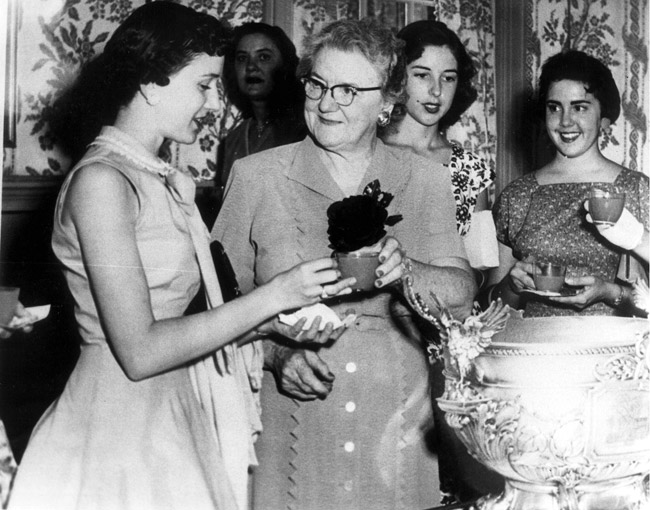
Maud Crawford, center, with Arkansas Girls State participants.
Arkansas was a hotbed for mob activity in the first half of the 20th century. Al Capone regularly visited the state in the 1920s, spending ample time in Hot Springs betting on horse races at Oaklawn and relaxing in some of the many bathhouses that lined Central Avenue.
Naturally, a state so amiable to mobsters was bound to have a fair amount of shady business deals. That’s where Maud Crawford came in.
A well-known public figure in Camden and a pioneer for women in Arkansas, Crawford worked as a court stenographer before she decided to take the bar exam. Having had no formal legal classes, she aced the exam and eventually became an expert in abstract and title law. At the time of her disappearance, she was even assisting U.S. Sen. John McClellan of Arkansas with a congressional investigation into supposed mob ties with organized labor.
Crawford’s last known whereabouts place her at home. Her husband, Clyde, returned to find her car still in the driveway, the TV on, and money in her purse. Their supposed guard dog wasn’t even fazed. The police began searching for Crawford the next morning, but found few clues for her disappearance. Crawford’s body was never recovered.
In 1986, a series of articles in the Arkansas Gazette by Beth Brickell alleged that Crawford’s disappearance involved then-Arkansas State Police Commissioner Mike Berg. Crawford was looking into a potentially illegal transfer of assets between Berg and some of his family members. Only days before disappearing, she had confronted Berg face-to-face about the issue, Brickell wrote.
Meanwhile, Odis A. Henley, the officer originally assigned to the case, reported to his superiors that evidence he uncovered implicated Berg as Crawford’s killer. This contradicted official statements from the Ouachita County Sheriff’s Office, which said it failed to turn up any clues regarding her disappearance.
Henley’s findings did little to sway the rest of the force, though, and he was reportedly told by his superiors that “there’s too much money involved” before being reassigned. Adding to the intrigue, all of his files on Crawford disappeared after a short trip away from the office.
Legally declared dead by Ouachita County in 1969, Crawford’s death certificate officially lists her demise as the result of “foul play perpetrated by person or persons unknown.”
The Edwards Murder
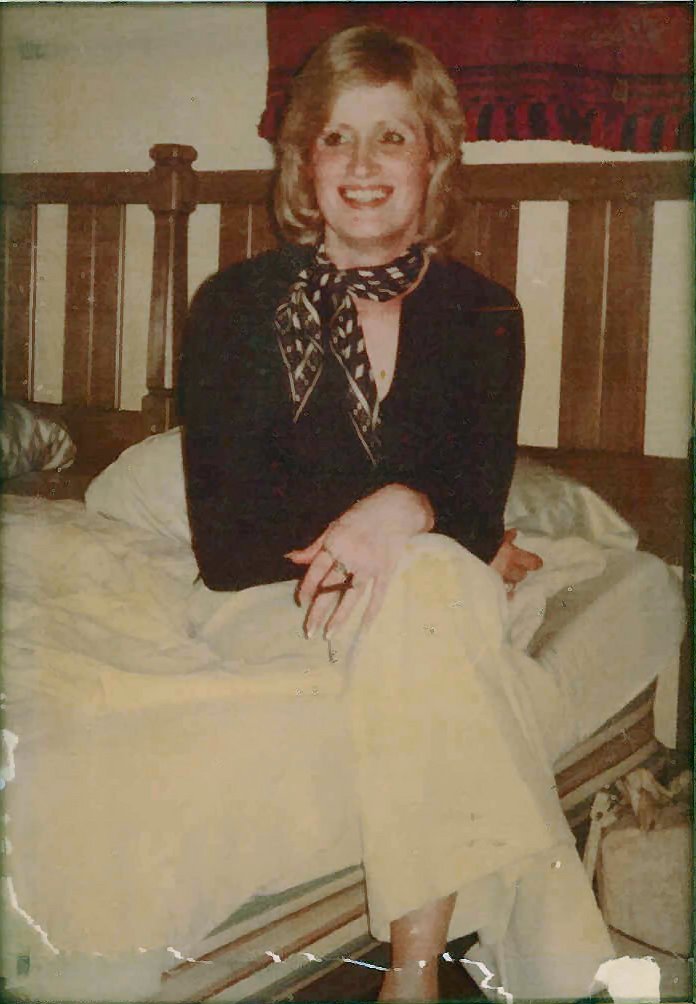
Linda Edwards’ mysterious death has alleged ties to Saline County officials.
Arkansas in the 1970s wasn’t the most hospitable place for an unwed mother of three. So when Linda Edwards got a job as dispatcher for the Garland County Sheriff’s Office, she considered it a godsend — but just six months after joining the force, she vanished.
Rumors began to circulate that the man she had been having an affair with, Sgt. Thurman Abernathy, had gotten her pregnant. The pair had argued over whether or not to keep the baby — she wanted it; he didn’t.
Their spat escalated past verbal exchanges and Abernathy allegedly killed her. Along with their stormy relationship, further implicating Abernathy in Edwards’ murder was testimony from her friend, Mary Patterson, who told police that Edwards was going to meet Abernathy the night she disappeared.
While the missing person’s case dragged on for nearly a year, things took a frightening turn when a hunter stumbled upon Edwards’ partially buried remains in the woods. After exhuming the body, medical examiners reported that she died from blunt-force trauma to her skull. A few months later, Abernathy was formally charged with her murder.
Arguing that most of the evidence against him was hearsay, Abernathy appealed his case. While the appeal wound its way through the courts, the case was passed along to Dan Harmon, the newly appointed prosecutor for Saline County.
Harmon dropped all charges against Abernathy, who had recently been promoted to lieutenant at the sheriff’s office. The decision to indict Abernathy was left to a grand jury, which cited insufficient evidence for its reason against bringing new charges.
Despite an intense statewide investigation, no tangible evidence has ever surfaced linking Abernathy to Edwards’ murder, and the case remains unsolved.
The Train Deaths (aka the Boys on The Tracks, the Mena Murders)
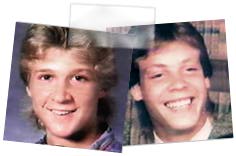
The murder of Don Henry, left, and Kevin Ives was featured on Unsolved Mysteries in 1988.
Arguably the state’s most notorious cold case, the mysterious deaths of Don Henry and Kevin Ives still haunt Central Arkansas.
The mangled bodies of Henry and Ives were discovered near dawn on Aug. 23, 1987 on a set of railroad tracks in Bryant, a suburb just south of Little Rock.
The train’s engineer saw the boys’ bodies from a distance, but didn’t have enough time to bring the train to a complete stop. He told police they were laying motionless on the tracks, parallel to one another with their arms straight down at their sides, their bodies partially covered by a green tarp.
The initial investigation was swift.
Fahmy Malak, the state medical examiner, ruled Henry and Ives’ deaths accidental. Malak declared that the boys were under the influence of marijuana and tragically had passed out on the tracks. However, the boys’ parents didn’t agree with that conclusion — they were certain their sons died of foul play.
After fighting to get the case reopened, they finally succeed in early 1988. One of the families’ first goals was to get their sons’ bodies exhumed. Their findings where chilling.
Dr. Joseph Burton, an out of state forensic pathologist, examined the remains and concluded both boys had suffered injuries prior to being crushed by the train. Henry’s shirt was in tatters, with lacerations all over his body indicative of stabbing. Ives, meanwhile, had blunt force trauma to his skull. Burton concluded the boys were likely unconscious or dead before being run over by the train. The reported green tarp was never seen again.
The case got stranger. Witnesses came forward with testimony that they’d seen police officers beating Henry and Ives unconscious before tossing them in the back of a truck and speeding off. Others reported seeing a man in military fatigues loitering near the section of tracks where the bodies were discovered. Meanwhile, alleged witnesses with potential information about the murder died in droves.
Speculation about the case was rampant, with many in Bryant wondering if the boys had simply been in the wrong place at the wrong time. Some thought the boys had seen a “drug drop” that was connected to alleged cocaine smuggling via the Mena Airport.
Others insisted that the boys saw a Bryant official — that Dan Harmon fellow we mentioned earlier, to be exact — partaking in a drug deal, and Kevin and Don were simply victims of being potential witnesses that could jeopardize Harmon’s career.
Harmon, who previously had been investigated for drug trafficking, was later arrested on charges for running a drug ring, selling primarily cocaine, from his law office.
The parents did receive some closure for their efforts. A grand jury reversed its original verdict of “probable homicide” to “definite homicide” due to more contradictory evidence.
Arkansans haven’t forgotten the boys on the tracks. Residents honored their memory with a memorial last spring. But after 25 years, it appears that the case will forever remain unsolved.
Bleacher Report’s article ranking the top 10 best games of the Arkansas-LSU rivalry barely scratched the surface. To be fair, though, BR was only recounting games in the Battle for the Golden Boot era, a “tradition” that began in 1996.
The rivalry actually dates back to the early 1900s. The Hogs and Tigers first squared off in 1901, when LSU thumped Arkansas 15-0. Despite the underwhelming contest, it ignited an annual battle that spanned the next three decades.
Below are Enter the Razorback’s top 10 most memorable games between the neighboring states:
10. Establishing the Golden Boot — LSU 17, Arkansas 7
Kevin Faulk, left, rushed for over 4,000 yards and scored 46 touchdowns during his four years at LSU.
By the mid-90s, Arkansas was slowly finding its niche in the SEC. The Hogs were fresh off of their first SEC Championship Game appearance in ’95 and seemed primed to become a formidable program in the conference.
Beating the Tigers in the inaugural Battle of the Golden Boot would have been a great way to build the momentum. But LSU had other plans.
Since joining the SEC, the Hogs were 2-2 against the Tigers. LSU was suddenly in the unfamiliar position of being the underdog in a conference rivalry. Adding to its woes, the Hogs were winning handily at Tiger Stadium. And since the decades old rivalry finally had some hardware to legitimize it, the Tigers were ready to add it to their trophy case.
The Tigers opened the game with a dominating first quarter, outscoring the Hogs 14-0. Neither team managed a score in the second period, but LSU added to its sizable lead on a field goal late in the third quarter to take a commanding 17-0 lead.
Despite intercepting LSU’s Herb Tyler twice and recovering two fumbles, Arkansas’ offense never managed to convert the turnovers into points. The Hogs lone touchdown came late in the third quarter when running back Chrys Chukwuma slipped into the end zone from three yards out.
9. Tigers hold off Hogs — LSU 17, Arkansas 15
Hogs fans are still kicking Chris Balseiro for this one.
Wrapping up what would be another dismal 4-7 season under Houston Nutt, Arkansas entered its annual matchup with LSU in 2005 on a surprising two-game win streak. The Tigers, meanwhile, were ranked No. 3 in the country and gunning for their third SEC West title in five years.
LSU was a heavy favorite. And the Tigers probably thought they could win easily even if they left their second string in. But that’s where you’ve got to give Nutt some credit as a coach — he was an excellent motivator. And that “rah-rah” attitude was exemplified by the ’05 Battle for the Golden Boot.
Trailing 19-3 late in the third quarter, Arkansas rallied to pull within 19-17 at the start of the fourth period. Running back Darren McFadden carried the offensive burden, scoring the team’s only touchdown. But two missed field goals from Balseiro — one from 28 yards — doomed the Hogs.
8. Undefeated in The Rock no longer — LSU 55, Arkansas 24
Nick Saban sayshe doesn’t like to run up the score. But Hog fans know better.
Back-to-back 52-point thrashings will make you doubt his philosophy.
After the inception of the Golden Boot in 1996, the trophy changed hands on almost a yearly basis. And the Hogs could usually count on a win in Little Rock. During Nutt’s tenure, the Razorbacks rarely lost in the capital city, and they were perfect against LSU in War Memorial Stadium between 1997-2002.
That streak came to an abrupt end in 2003.
No. 3 LSU steamrolled Arkansas 55-24 en route to winning a national championship. The 32-point thrashing was the largest disparity since the 1929 contest. It was also the Tigers’ second largest margin of victory in the series.
The Razorbacks managed to keep it close in the early going, with the first quarter ending in a 10-10 tie. But in the second quarter, LSU exploded for 24 points to take a commanding 34-10 lead. The Tigers continued the offensive onslaught in the second half, scoring three more touchdowns. LSU’s resounding win also started a streak of four straight victories over the Hogs.
7. LSU survives in overtime — LSU 33, Arkansas 30
For the briefest of moments in November 2009, Razorback fans could finally say that the Battle for the Golden Boot meant as much to LSU as it did to Arkansas.
With Hogs kicker Alex Tejada lining up for a potential game-tying field goal in overtime, LSU’s players linked arms on the sidelines. They huddled together, some watching the game while others had their head down. A similiar situation was unfolding on the Hogs’ sideline.
It was a defining moment in the rivalry.
Prior to Tejada’s theatrics, LSU safety Chad Jones leveled Arkansas receiver Joe Adams with a bone-jarring hit. The frightening collision stopped play for nearly 10 minutes while CBS treated viewers to an array of replays. As brutal as the hit was on Adams, it was Jones who took the brunt of the blow, knocking himself out of the game. The penalty gave the Hogs a second shot at the end zone, too, and they responded with a touchdown to take a 30-27 lead.
However, the Tigers stormed back to tie the game on a long field goal with four seconds left in regulation. Holding LSU to a field goal on its first possession in overtime, the Hogs only needed a chip shot of their own to force a second overtime. But Tejada’s kick was wide, and the Razorback faithful were crushed.
The ’09 match-up was especially noteworthy as a barometer for how competitive the series had become. It was the fifth game in five years that the outcome was decided by five or less points.
6. The Miracle on Markham — Arkansas 21, LSU 20
After Arkansas departed the Southwest Conference for the SEC in 1992, the Little Rock games lost some of their luster. For more than 50 years, War Memorial Stadium was the pivotal site for many of the Hogs’ biggest games. But by 2000, the stadium hadn’t hosted a meaningful game in nearly two decades.
That all changed when LSU came to town in 2002.
The winner of that year’s Battle for the Golden Boot would clinch the SEC West Division, automatically earning a spot in the SEC Championship Game.
For the first half, though, Arkansas played like it didn’t want to make the trip to Atlanta. No. 18 LSU dominated from the outset, shutting out the Hogs in the first half and taking a 17-7 lead into the third quarter.
Arkansas running back Fred Talley helped sway the momentum with a 56-yard touchdown midway through the fourth quarter, cutting LSU’s lead to 17-14. However, the Tigers responded with a field goal to go up 20-17.
With time ticking away, Arkansas quarterback Matt Jones put together his best drive of the game. Jones hit Richard Smith for a 50-yard gain, then bought some time in the pocket before threading a pass through LSU’s secondary to find Decori Birmingham in the back of the end zone. The Hogs converted the extra point to pull ahead 21-20, and held LSU on defense to secure the miracle victory.
Incredibly, Jones’ final two passes — which covered a total of 81 yards and culminated in a touchdown — where only his third and fourth completions of the game.
5. Battle of top 5 teams — LSU 31, Arkansas 26
After more than seven decades of football, the LSU-Arkansas game finally got its first top 10 matchup in 2006.
No. 5 Arkansas entered the afternoon on a 10-game win streak, and the Razorbacks were guaranteed a spot in the SEC Championship Game regardless of the outcome. The Tigers, ranked ninth, were looking for to release some pent-up frustration after critical losses had derailed the their hopes for a national championship run.
The 2006 Battle for the Golden Boot was an exciting contest, punctuated by big plays from both teams. Once again, McFadden was the highlight for Arkansas, scoring on an 80-yard touchdown run that went right through the heart of LSU’s defense.
While McFadden’s touchdown pulled the Hogs to within 24-19 in the fourth quarter, Trindon Holliday responded with a breathtaking 92-yard kickoff return to put LSU up 31-19. The Hogs added a late score to cut the deficit to five, but simply ran out of time.
4. Gridlocked in Dallas — Arkansas 0, LSU 0
Snow and ice didn’t keep fans in Dallas from missing the 1947 Cotton Bowl.
The first postseason matchup between the longtime rivals, the 1947 Cotton Bowl was marred by a freak ice storm that paralyzed Dallas the week of the game. Despite hazardous conditions, nearly 40,000 fans still showed up to watch two top 10 teams slug it out.
The No. 9 Tigers entered the game with a sterling record of 9-1. Their only loss was against SEC rival Georgia Tech. Meanwhile, No. 10 Arkansas limped in at 6-3-1, with inexplicable losses to Tulsa and Ole Miss. But the Hogs had rebounded late in the year with back-to-back wins over SWC foes Texas A&M and No. 5 Rice to salvage the season.
LSU dominated (stastically) for most of the afternoon. Led by future NFL Hall of Fame quarterback Y.A. Tittle, the Tigers out-gained the Hogs 271-54 in total yardage and accumulated 14 more first downs than Arkansas. But poor field conditions coupled with a stout Razorback defense — which had shut out four opponents during the regular season — thwarted several Tigers drives that reached the red zone.
Battling to a 0-0 standstill through nearly four quarters, the Tigers found themselves in possession of the ball with just a handful of minutes remaining in the game. Desperate for a score, Tittle flung a long pass to receiver Jeff Adams, who broke free near midfield and looked destined for the end zone. But Arkansas’ Clyde Scott tackled Adams near goal line with just a handful of seconds left in the game.
Now in field goal range, the Tigers decided to send out their kicking unit. But true to form, Arkansas’ defense rose to the occasion, blocking the kick as time expired to preserve the tie.
3. The Miracle on Markham II — Arkansas 31, LSU 30
No quarterback in Arkansas’ history overcame more adversity than Casey Dick.
Recruited by Nutt, Dick was benched early in his sophomore season in favor of Arkansas Golden Boy Mitch Mustain.
Forced to watch from the sidelines while Mustain guided the Hogs to a 7-1 start – largely thanks to Arkansas’ three-headed rushing attack – Dick was slowly becoming an afterthought to most fans. But as Mustain failed to progress, and the relationship between Nutt and offensive coordinator Gus Malzahn deteriorated, Dick re-gained his starting role.
Rebounding in 2008 with career numbers, Dick concluded his Razorback career in story-book fashion with a memorable win over LSU. In the fourth quarter, he led the Hogs on a drive for the ages, capping his embattled career with a fourth-and-1 pass to London Crawford to tie the game. Tejada booted in the extra point to give the Hogs the one-point lead and Arkansas held on for the upset.
To date, Dick is the only Arkansas quarterback to win consecutive Golden Boot trophies.
2. Mammoth upset — LSU 14, Arkansas 7
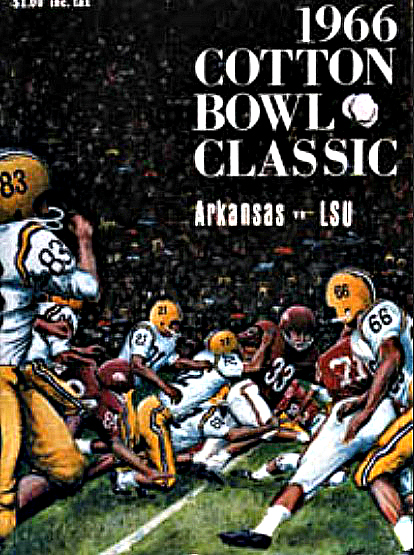
The official program for the 1966 Cotton Bowl cost a mere $1 on game day. Today, copies easily sell for upwards of $100.
Never give your opponents “bulletin board material.” The Hogs found that out the hard way in 1966.
Winners of 22 straight and riding the nation’s longest winning streak, No. 2 Arkansas entered the 1966 Cotton Bowl hoping to secure its second consecutive national championship with a win over LSU.
The Razorbacks drew first blood, when quarterback John Brittenum completed a pass to Bobby Crockett for a 19-yard touchdown to put Arkansas up 7-0 in the opening quarter. It was the only score of the period.
LSU responded with an 80-yard drive, punctuated by running back Joe Labruzzo’s 1-yard touchdown run. On the Hogs’ next possession, Brittenum went out with an injury and was replaced by Ronny South, who was primarily used for kicking situations. Unprepared for the Tigers swarming defense, South fumbled on his first snap. LSU recovered the ball in Arkansas territory and converted the turnover into points just a few plays later when Labruzzo barreled in for this second score of the day to put LSU up 14-7.
Brittenum returned for Arkansas in the second half, but the Hogs never found any rhythm on offense. Luckily, the Razorback defense was immaculate in the third quarter. The Hogs kept LSU from gaining even one first down.
Arkansas put together two long drives in the final minutes. But Brittenum was intercepted in LSU territory and the turnover all but sealed the Hogs’ fate. With the upset, LSU jumped from the depths of the unranked all the way to No. 8. The Tigers’ victory inadvertently vaulted No. 4 Alabama to the national title. The Crimson Tide were the next highest-ranked team that won their bowl game.
1. Triple overtime thriller — Arkansas 50, LSU 48
Arkansas’ 2007 season was underwhelming at best. And that’s describing it kindly.
Fans were convinced that year’s team would break through and finally win the SEC Championship. But inexcusable losses to Alabama and Kentucky quickly squashed that dream.
Late in the season, though, the Hogs offense finally started clicking. McFadden re-emerged as a Heisman contender. Felix Jones and Peyton Hillis seemed unstoppable. And, maybe most importantly, Dick was playing better than ever. Heading into the LSU game, the Razorbacks were rolling averaging nearly 35 points per game.
Still, the Arkansas faithful knew that beating the top-ranked Tigers in Baton Rouge wouldn’t be easy.
But the Razorbacks got a Herculean effort from McFadden, who rushed for three touchdowns and threw for another, as he finished with a game-high 206 rushing yards to pace the Hogs in the stunner.
Despite losing for the second time that season, the Tigers were voted into the national championship game, where they beat No. 1 Ohio State 38-24.

 This website, which emanates from a frightening report by the New York Times about the proliferation of military-grade equipment in several police precincts across the country, allows users to research the various hardware used by law enforcement, and is sortable by state and county. Arkansas, a state with just over 2 million people, possesses a shocking array of firearms and vehicles that seem more appropriate on the battlefield.




 Enter the Razorback